

Respective Strengths of Three Solar Street Light Architectures
Industry News · Outdoor Solar Lighting
Overview
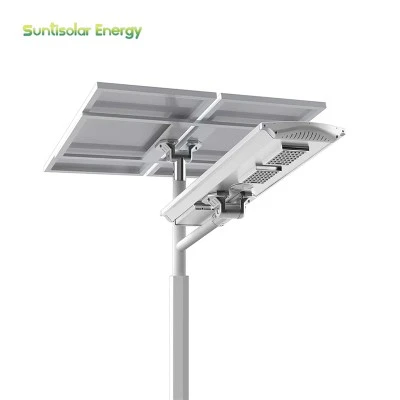
Solar street lighting is now a standard option for municipal roads, rural roads, housing estates, industrial parks and scenic areas. Products in this category are divided mainly by how the four core parts are put together: the solar panel, the LiFePO4 battery, the controller and the LED light source. All-in-One systems integrate the main components into a single unit. All-in-Two systems separate the solar panel from the lamp body, while Split systems use separately mounted solar panels, luminaires, and battery assemblies, with controller placement varying by design.
The purpose of this article is not to rank the three architectures. Each one is engineered around a different set of site conditions, and each is stronger on the constraint it was designed to relieve. The comparison below sets out, category by category, which problem each architecture solves best, using the specification files of a SUNTISOLAR All-in-One Z68 Series 80 W unit and an 80 W Split system as the working reference.
Structural Definitions and Reference Configuration
The three architectures differ in exactly how many field-mounted assemblies a set contains, and that single structural fact drives every advantage discussed later. Table 1 states each layout and the configuration documented in the supplied files.
|
Architecture |
How the four core parts are arranged |
Reference configuration in the supplied files |
|
All-in-One |
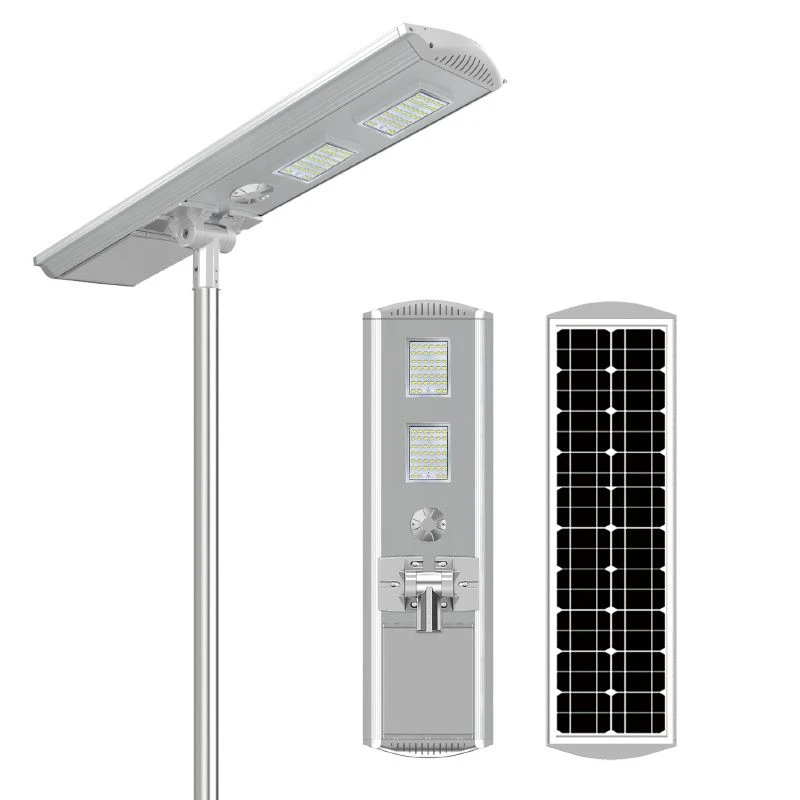
Panel, battery, controller and LED are sealed inside one housing that is fixed directly to the pole top. No external cable runs between components. |
Z68 Series XT1425SELD80-D5, 80 W: 42 pcs of 5050 LED in two modules, 100 Wp mono panel, LiFePO4 45 Ah/12.8 V (576 Wh), body IP66, LED module and controller IP67, battery box IP66, 1425×432×88 mm, 23 kg net. |
|
All-in-Two |
Only the panel is detached and mounted on its own bracket; battery, controller and LED stay inside the lamp body and are joined to the panel by one waterproof connector. |
Not covered by the supplied files. This architecture is discussed here at layout level only, so no part-level figures are quoted. |
|
Split |
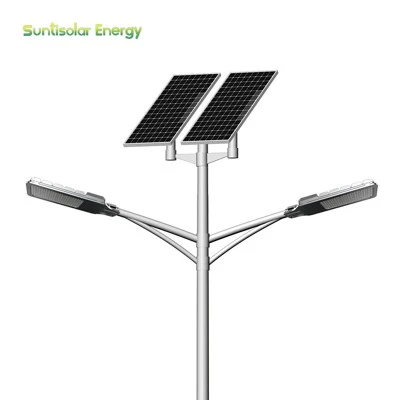
Panel, battery pack (with controller) and LED luminaire are three separate units, each mounted on the pole: panel on a top frame, battery and controller under the panel, lamp on the arm. |
80 W Split system: 300 Wp mono panel, LiFePO4 25.6 V 75 Ah, 36 V 80 W LED (SMD5050×84, 240 lm/W), 8 m Q235 hot-dip galvanized pole with 400×400×20 mm flange, controller IP68, lamp IP66. |
Table 1 Component layout and reference configuration of the three architectures
Source: SUNTISOLAR, Z68 Series 80 W All-in-One specification and 80 W Solar Street Lights specification.
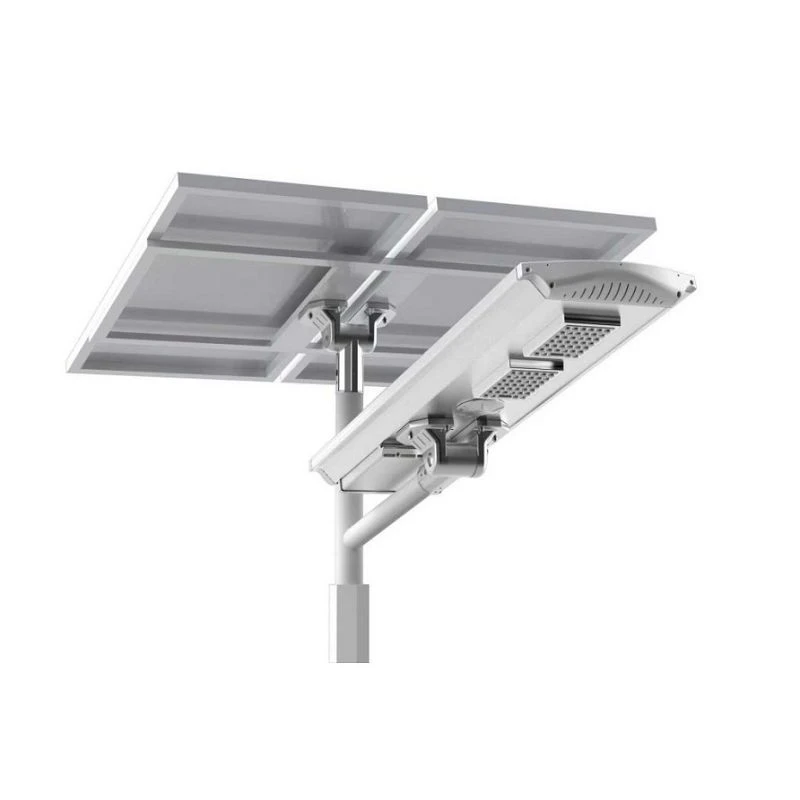
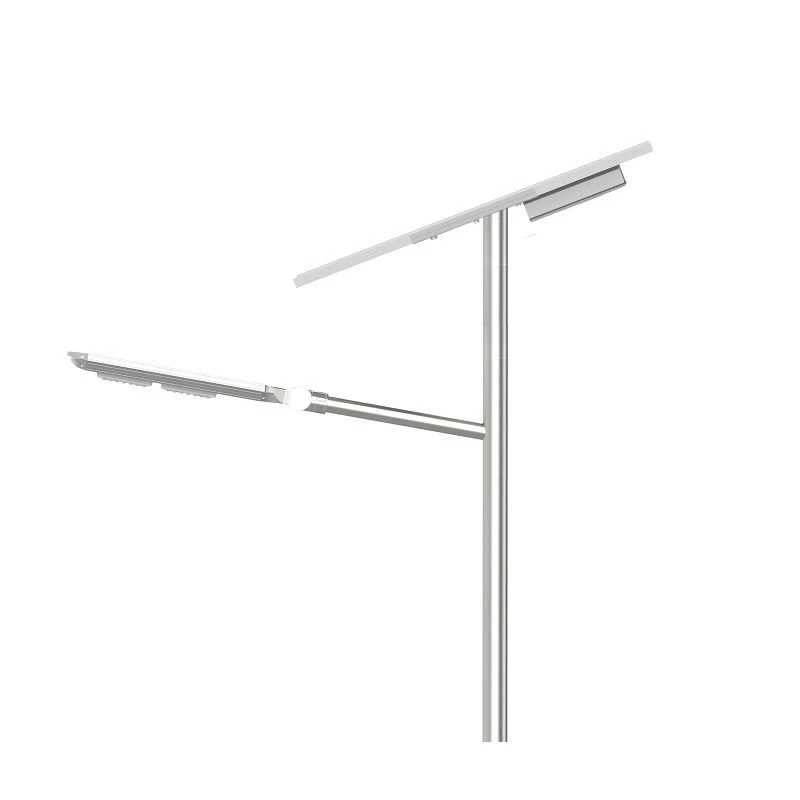
Source: SUNTISOLAR 80 W Solar Street Lights specification, major specification page.
Core-Advantage Comparison
Read across any row of Table 2 and the trade-off becomes visible: the same structural decision that makes one architecture fast to deploy is the one that constrains its energy head-room. That is why the strengths below are complementary rather than competing.
All-in-One wins on field labour and on a clean pole-top silhouette, and pays for it in capacity ceiling and in a fixed panel tilt. All-in-Two recovers panel orientation freedom at the cost of one extra bracket and a two-part shipment. Split gives up hand-installation speed but returns the largest solar and battery head-room, independent serviceability of every part, and a thermal layout in which the panel shades the battery.
|
Advantage dimension |
All-in-One |
All-in-Two |
Split |
|
Field installation |
One piece to lift and mount. Documented as installable by untrained workers within 5 minutes, with no wiring between parts. |
One extra step: fix the panel bracket and connect a single waterproof plug. No separate battery box to excavate or wire. |
Three assemblies plus cable routing: panel frame, battery and controller under the frame, lamp on the arm. |
|
Panel orientation |
Panel shares the housing tilt. Illumination can still be refined through the ±15° adjustable LED module angle. |
Panel tilt set independently, so the panel can face the sun while the lamp faces the road. |
Panel carries its own frame and tilt; the widest freedom in both tilt and azimuth. |
|
Energy capacity head-room |
100 Wp panel and 576 Wh battery inside a 1425×432×88 mm body; capacity is bounded by the housing envelope. |
Panel size can exceed what a single housing allows, with the battery still inside the lamp body. |
300 Wp panel with 1,920 Wh (25.6 V 75 Ah) battery on the same 80 W system, with 7–10 day reserve documented for the All-in-One and 365-day lighting claimed for the Split controller. |
|
Heat management |
LED, controller and battery share one sealed body; heat is managed by the die-cast housing and internal layout. |
Panel heat is separated from the battery and LED, although the battery still sits behind the lamp body. |
Panel acts as a sun shade over the battery and controller, which sit under the frame with natural air cooling. |
|
Wind load |
Compact single body on a Ø60 mm pole; wind resistance rated to 209 km/h (Grade 12). |
Panel adds sail area above the lamp, so the bracket carries the panel load on a short arm. |
Panel and battery are carried as part of the pole-top structure; this layout is documented as the wind-resistance design of the system. |
|
Maintenance and replacement |
Sealed modular body; the LED module and the battery module are replaceable units without opening the whole set. |
Panel replaceable on its own; battery and lamp body are handled as one unit. |
Every part is independently serviceable: panel, battery, controller, LED lamp and pole. |
|
Appearance on the pole |
Cleanest silhouette, with nothing projecting beyond the body. |
One visible panel above the lamp head. |
Open frame layout in which brackets and hardware remain visible. |
|
Logistics and spares |
2 pcs per carton, 46 kg gross; 800 pcs per 40HQ container on pallets; a single SKU to stock. |
Two cartons per set (panel and lamp body), so spares are split across two SKUs. |
Five or more items per set and a larger packed volume per installed point. |
|
Typical fit |
Roads, squares, housing estates and scenic spots where grid connection is difficult and deployment speed matters. |
Roads where the panel azimuth and the lamp orientation conflict, or where partial shading must be avoided. |
Trunk roads, industrial parks and remote sites needing long autonomy and high output per pole. |
Table 2 Advantage comparison by dimension across the three architectures
Source: compiled from the two SUNTISOLAR specification files; All-in-Two entries are architecture-level statements, since no part-level document for that layout was supplied.
All-in-One Architecture: What the Z68 Documentation Confirms
The All-in-One advantage is realised through integration, and the Z68 file shows how far that integration can be pushed while keeping service access. The unit is 1,425 mm long and 88 mm thick, weighs 23 kg, and is fixed to a Ø60 mm pole at 8–9 m mounting height with 30–32 m spacing and a 360 m² irradiated area.
Its sealed body carries an IP66 rating, with the LED module and controller at IP67 and the battery box at IP66; output is 9,600–11,200 lm at 3,000–6,500 K with CRI 70. Run time is 12 hours at full power and 84 hours under smart power control after a 6-hour charge at 1,000 W/m², and the unit is documented for 7–10 consecutive rainy days. Battery module life is stated as over 10 years and panel life over 25 years, with the panel guaranteed to retain 80% output.
Two details support the integration claim in practice. The LED module angle adjusts ±15°, so illumination can be tuned without changing the panel tilt, and internet control is available as an option: remote monitoring of position, operating record and fault type, group and single-light dimming, and fault alarms covering panel, LED, battery and controller. That control layer is what makes a single-SKU, high-volume fleet practical to operate.
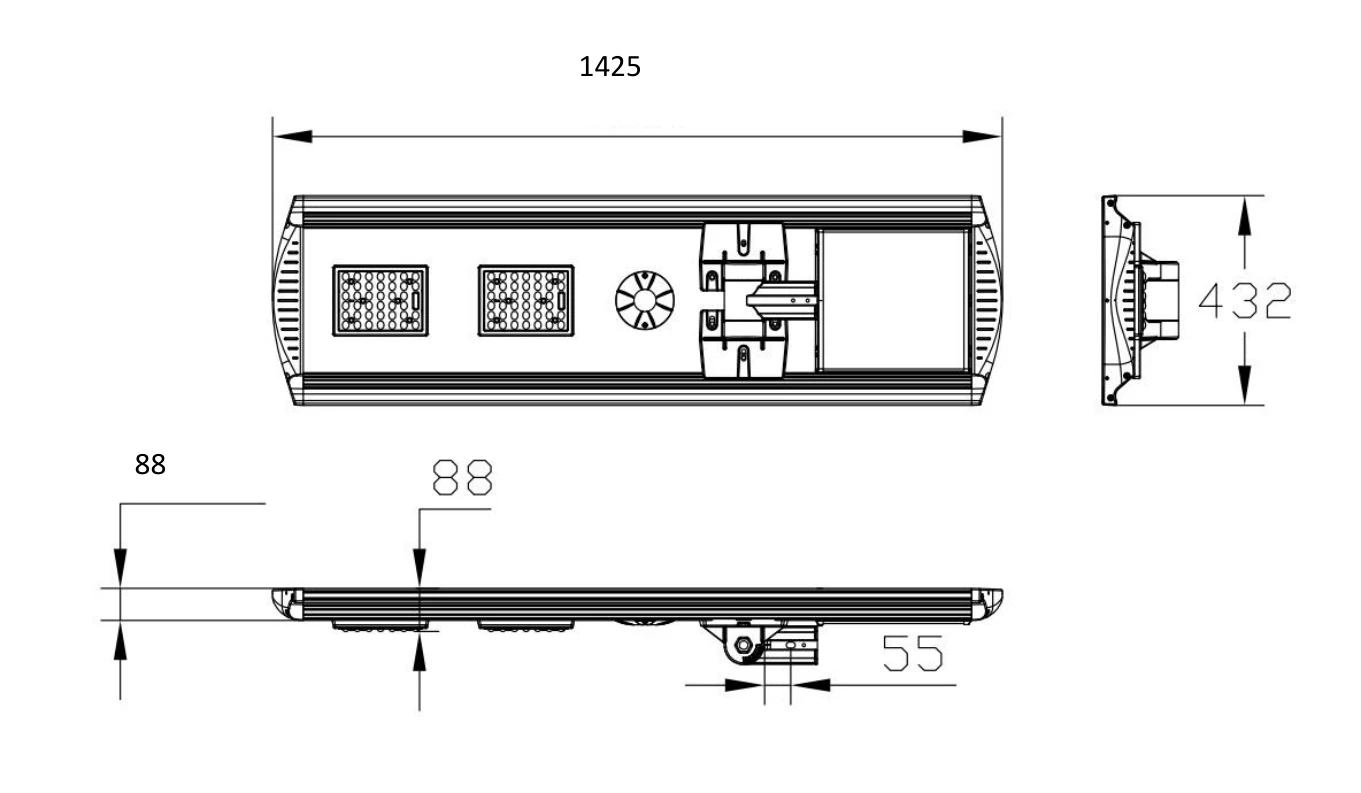
Figure 3 Overall dimensions of the All-in-One Z68 body: 1,425 mm×432 mm×88 mm
Source: SUNTISOLAR Z68 Series specification, product dimension page.
Split Architecture: What the 80 W Documentation Confirms
The Split advantage is capacity and serviceability, and the 80 W file quantifies both. On an 80 W luminaire the system pairs a 300 Wp monocrystalline panel of 1,535×880×35 mm (56 cells, IP67, 25-year 80% output warranty) with a 25.6 V 75 Ah Grade A LiFePO4 battery rated above 4,000 cycles and weighing 13 kg. That is roughly 3.3 times the panel capacity and 3.3 times the stored energy of the All-in-One reference at the same nominal lamp power.
The lamp itself is a 36 V 80 W die-cast aluminium unit with 84 SMD5050 chips, 240 lm/W and above 4,000 K, measuring 942×370×84 mm, rated IP66 with a 140° beam angle and a five-year, 50,000-hour warranty at 80% output.
Three design choices explain why this layout carries that much capacity. The panel sits on a strong top frame sized for wind load; the battery and controller are placed under the panel frame, where the panel shades them and air moves freely, keeping the pack away from direct sun; and panel plus battery are carried as part of the pole top rather than on a separate arm. The controller adds three-stage PWM charging with 6/8/10/12-hour discharge profiles and low-light charging that the document claims keeps the lamp lit every day of the year.
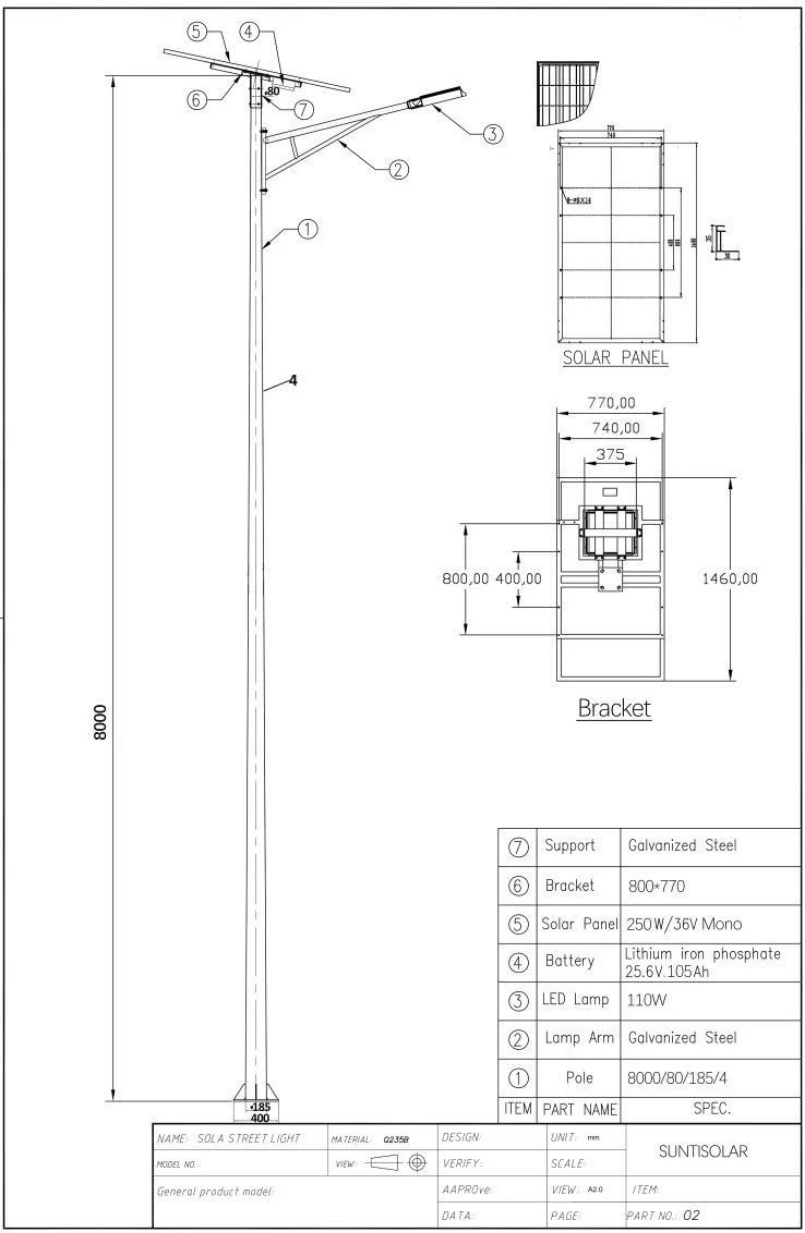
Figure 4 Split system arrangement and bill of materials: panel bracket, battery and controller position, lamp arm and pole
Source: SUNTISOLAR 80 W Solar Street Lights specification, 8 m pole details page.
|
|
|
|

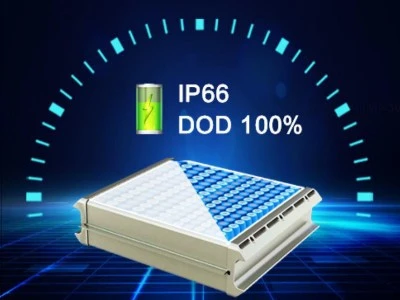
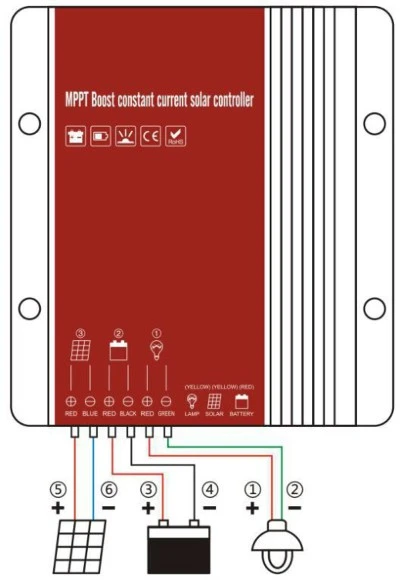
Figure 5 Key components of the Split system, left to right: 300 Wp monocrystalline panel, IP66 LiFePO4 battery pack, IP68 MPPT/PWM controller with wiring diagram
Source: SUNTISOLAR 80 W Solar Street Lights specification, solar panel, battery and smart controller pages.
Installation and Mounting Details
Split systems put more demand on the installer, and the documentation reflects that: mounting conditions are stated explicitly rather than left to the site. The 8 m pole is Q235 steel, 4 mm wall, 80 mm at the top and 185 mm at the base, with a 400×400×20 mm flange plate and hot-dip galvanizing, and the lamp arm accepts pole diameters from Φ52 mm to Φ61 mm.

Figure 6 8 m pole, anchor cage and foundation drawing for the pole-top systems
Source: SUNTISOLAR Z68 Series specification, light pole sketch page.
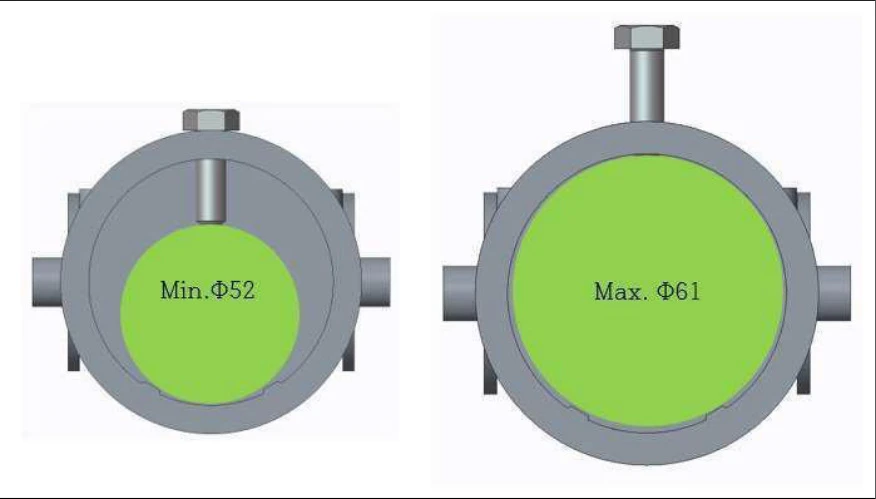
Figure 7 Lamp arm clamping range: minimum Φ52 mm, maximum Φ61 mm pole diameter
Source: SUNTISOLAR 80 W Solar Street Lights specification, lamp arm assembly page.
Packing follows the same logic. The All-in-One ships two units per box at 46 kg gross, with the hex keys, installation instruction, certificate and test report in the same carton, and 800 units fit a 40HQ container on pallets of 1,530×1,150×2,500 mm. That is a direct consequence of the single-SKU design and is the reason the All-in-One suits projects that are rolled out in volume.

Figure 8 Packing arrangement for the All-in-One unit, two units per carton
Source: SUNTISOLAR Z68 Series specification, package page.
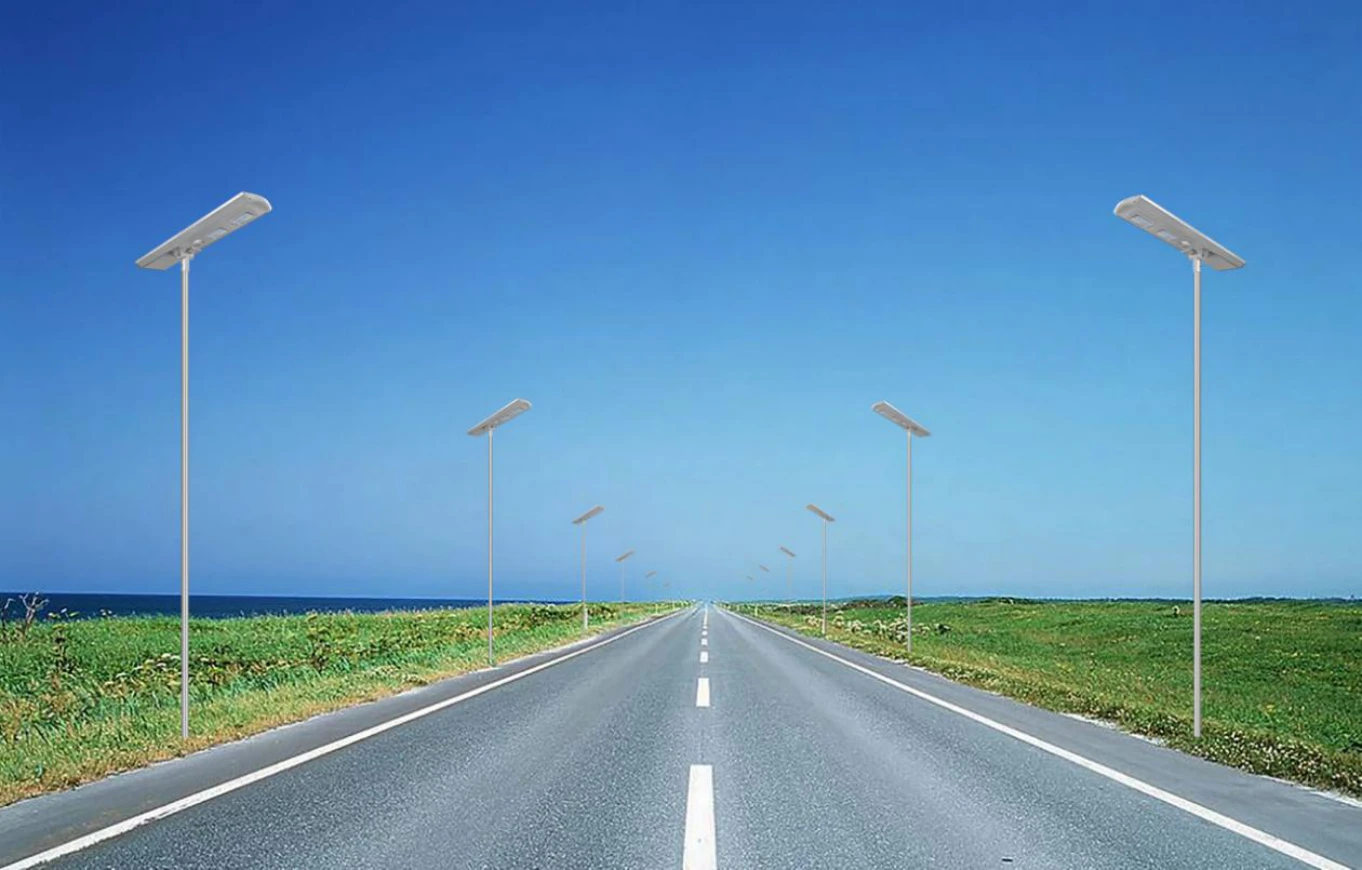
Figure 10 Pole-top systems in service on a rural road alignment
Source: SUNTISOLAR Z68 Series specification, installing effect diagram page.
Industry Viewpoint
No single architecture is best across all projects. All-in-One, All-in-Two and Split exist because they relieve different constraints, and a specification that ignores the constraint being relieved will underperform regardless of the product quality.
In practical terms the choice follows from four site facts rather than from preference: the sunshine resource and the required rainy-day autonomy decide panel and battery capacity, and therefore which architectures can physically deliver it; the angle between road orientation and the optimal solar azimuth decides whether the panel must tilt independently; the mounting height, wind zone and foundation conditions decide what the pole must carry; and the maintenance model after handover decides how far components should be separable. Where the required capacity is modest and deployment speed dominates, an integrated unit answers the brief. Where capacity, autonomy or part-level service dominates, a separated layout does.
Procurement and Engineering Knowledge Points
1. Read panel wattage against lamp wattage, not against the product name. An 80 W lamp appears with a 100 Wp panel in the integrated unit and a 300 Wp panel in the split system; autonomy, not the model number, tells you which one a site needs.
2. Confirm which protection rating applies to which part. In the Z68 file the body is IP66 while the LED module and controller are IP67 and the battery box is IP66; in the Split file the lamp is IP66, the panel IP67 and the controller IP68. A single headline IP figure can hide the weakest component.
3. Check the mounting interface against the pole you own. The Split lamp arm covers Φ52–Φ61 mm and the integrated unit is specified for a Ø60 mm pole; a mismatched clamp is a site delay, not a specification detail.
4. Verify autonomy as a documented number with its test condition. The All-in-One states 12 hours at full power and 84 hours in smart mode after a 6-hour charge at 1,000 W/m², and 7–10 rainy days; the Split controller claims 365-day lighting through low-light charging. Compare those claims on the same load profile.
5. Plan the spares list from the bill of materials. One SKU with replaceable LED and battery modules is a different stock and training proposition from a set of five independently replaceable parts.


