

SEO Meta Description
Learn about the major solar street light types, including all-in-one, all-in-two, split, hybrid, and smart solar street lights. Compare advantages, disadvantages, applications, and buying tips.
Introduction
Solar street lights have become one of the fastest-growing outdoor lighting solutions due to rising energy costs and increasing demand for sustainable infrastructure. They eliminate electricity bills, reduce carbon emissions, and provide reliable lighting in areas without access to the power grid. However, most customers are confused which type of solar street light to choose. Understanding the different solar street light types helps project owners choose the most suitable solution.
1. All-in-One Solar Street Light
An all-in-one solar street light integrates the solar panel, LED lamp, battery, and controller into a single unit.

Advantages:
• Easy installation
• Low labor costs
• Modern appearance
Disadvantages:
• Cost bit higher than split types
• Less flexibility for upgrades
2. Self Cleaning Solar Street Lights
This is another type all in one solar street light with self cleaning function.

Advantages:
• Free Maintenance, specially for the solar street light installed in Middle east and Africa at high pole more than 8m, the panel is covered with thick dust layer after 3 months, it saves a lot maintenance cost.
• Solar Panel charging efficiency is stable, at least 30% higher than the regular all in one solar street light after 3 months.
Disadvantages:
• Cost is higher
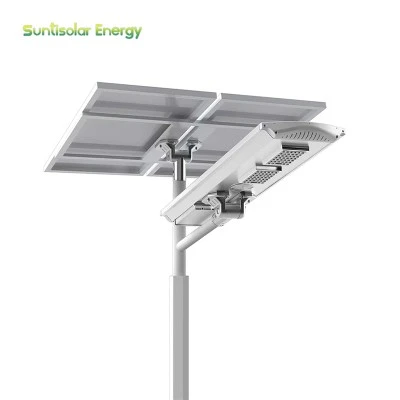
3. All-in-Two Solar Street Lights
This design combines the battery, LED fixture, and controller into one housing while keeping the solar panel separate. The main difference with all in one type is the solar panel is separate to make the solar panel size more flexible.

Advantages:
• Larger solar panel options
• Maximize the solar panel angle for higher charging efficiency
Disadvantages:
• More complex installation
• Higher initial cost than all-in-one models
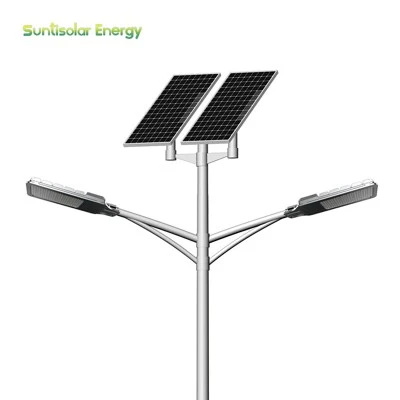
4. Split/Separate Solar Street Lights
Split solar street lights have separate solar panels, batteries, controllers, and LED fixtures.

Advantages:
• Maximum flexibility
• Supports large solar panels and batteries
Disadvantages:
• More wiring required
• Higher installation cost
• Battery is easy stolen
5. Smart Solar Street Lights
Smart solar street lights incorporate IoT technology, remote monitoring, adaptive dimming, and cloud-based management.

Advantages:
• Remote diagnostics
• Real-time monitoring
• Smart city compatibility
Disadvantages:
• Higher upfront investment
• Requires communications infrastructure
Comparison Table
- All-in-One: Most popular and easiest installation.
- Self Cleaning: Specially for desert area
- All-in-Two: Larger solar panel option
- Split Type: Most flexible but complicated installation
- Smart: Best management and monitoring capabilities.
How to Choose the Best Solar Street Light
Consider road width, pole height, local solar radiation, required brightness, budget, maintenance requirements, and future expansion plans. Projects in remote areas typically benefit from low-maintenance integrated designs.
FAQ
Q: Which solar street light type is best?
A: The answer depends on the application. You can leave your project details and we will send you proposals accordingly.
Q: Are self cleaning solar street lights worth the investment?
A: 100%. The labour and maintenance cost it saved is more than the original investment, what's more, it keeps the high charging efficiency for solar panel.
Conclusion
Each solar street light type offers unique advantages and disadvantages. Choosing the right system depends on project requirements, budget, and environmental conditions. By evaluating performance, maintenance, and life cycle costs, buyers can select a solar street lighting solution that delivers long-term value and sustainability.


