

One of the most frequent questions from our overseas clients for SUNTISOLAR solar street lights is: how many consecutive cloudy or rainy days can the light keep working reliably?
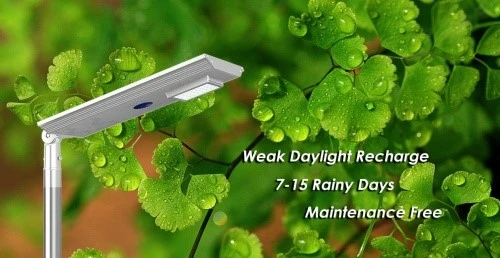
Many buyers assume the autonomy number is simply how many nights the battery can run with zero solar input. At SUNTISOLAR, our standard rainy-day design benchmark is 7–10 cloudy days, and this figure is not calculated based on "no charging at all". The key difference comes from our low-light optimized controller, which supports trickle charging from diffuse light even under heavy cloud cover.
How most competitors achieve 7–10 cloudy-day autonomy
It is important to understand the mainstream industry approach first. Most solar street light manufacturers that mark 7–10 rainy days mainly rely on passive energy reserve design under zero-sun assumptions, rather than continuous low-light harvesting. Their common engineering methods fall into four categories:
Oversized LiFePO4 battery bank
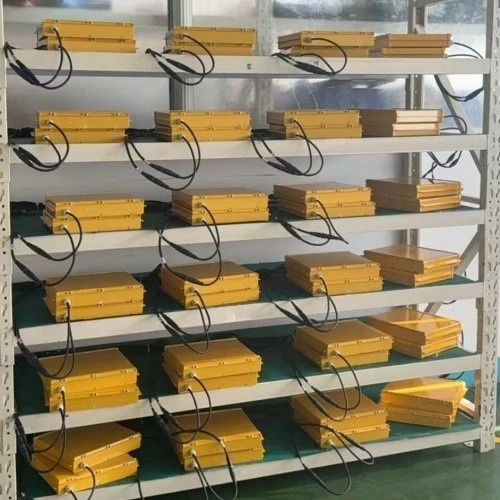
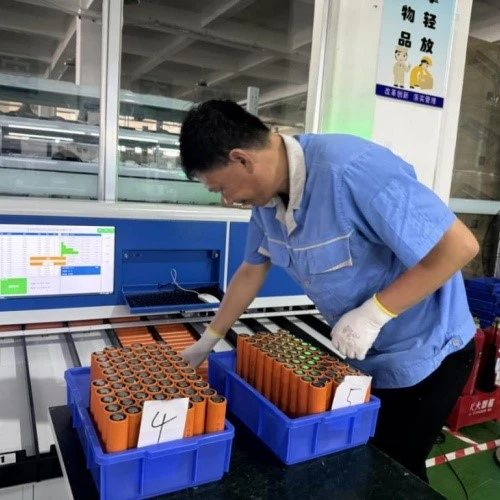
This is the most widely adopted solution. They scale up battery capacity directly with the formula: battery capacity = daily LED consumption × autonomy days ÷ DoD ÷ system efficiency. The whole 7–10-day rating is calculated on a conservative premise: no charging happens during cloudy days. The battery is fully charged on sunny days and gradually drains night after night until sunshine returns. Many suppliers will increase the derating margin and use A-grade LiFePO4 cells with 0.8 DoD to hit this target, which pushes up battery cost significantly.
Aggressive intelligent dimming strategy
Competitors apply strict multi-stage dimming and motion-sensor power cutback to cut average nightly power draw. A 60W fixture may run at 100% brightness only for early evening hours, drop to 50% after midnight, and fall to 20% or standby mode with no movement detected. This reduces average daily energy consumption by 40%–60%, so the same battery can support far more nights. For tender projects, some suppliers tune the dimming curve very conservatively just to meet the 7–10 day specification on paper.
PV panel over-sizing + high-efficiency mono panels
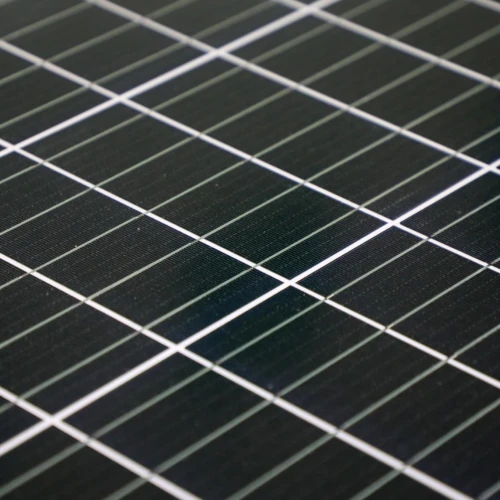
They upgrade to larger monocrystalline panels (sometimes N-type mono with better weak-light spectrum response) and set a higher panel-to-load ratio. The oversized panel helps refill the battery faster when the weather clears, and captures limited diffuse light. But for most conventional MPPT controllers from these vendors, the diffuse-light harvest is treated as a bonus, not a core design variable in their 7–10 day calculation. Their autonomy guarantee still stands even if that weak-light charging is ignored.
-
Wider safety margin and derating factors
For government bidding documents, many manufacturers add extra coefficients for low temperature, battery aging, soiling and wire loss. The published 7–10 days is a guaranteed backup figure under worst-case weather, assuming zero incoming solar energy throughout the whole cloudy period. This is the standard "autonomy" definition used in most tender datasheets across the industry.
The limitation of this mainstream route is obvious: once the cloudy spell exceeds the designed reserve days, the light will dim sharply or shut down completely. All the buffer is pre-stored energy, with almost no continuous energy replenishment during the rainy cycle.
The basic battery sizing formula (theoretical zero-sun baseline)
plaintext
Required Battery Energy (Wh) = Daily LED Energy Consumption × Autonomy Days ÷ Depth of Discharge (DoD) ÷ System Efficiency
Daily LED Consumption (Wh) = LED Power × Night working hours × intelligent dimming factor
Battery Capacity (Ah) = Total Battery Energy ÷ System Voltage
For LiFePO4 batteries widely used in SUNTISOLAR all models, we normally set DoD around 0.8, and reserve efficiency loss for controllers, wiring and low-temperature derating.
If we only calculate this theoretical model assuming 0% charging during cloudy days, the battery reserve can support roughly 5–6 nights of continuous lighting. This is the conservative baseline for tender and government project documentation, same as how competitors build their tender calculation sheets.
Real-world upgrade: low-light charging by SUNTISOLAR smart controller
This is where our system outperforms conventional solar street lights.
Our upgraded controller features low-light MPPT tracking logic. It keeps harvesting diffuse daylight on cloudy and rainy days. Even without direct sunlight, scattered light through clouds can generate continuous trickle charge back to the battery pack. The charging power is lower than sunny conditions, normally around 10–25% of peak panel output, but this incremental energy recharges the battery day by day during the cloudy cycle.
Instead of draining the battery fully over days, the system follows this real energy balance:
Battery remaining energy = Stored reserve − Nightly lighting consumption + Daily low-light recharge from cloudy diffuse light
That extra low-light recharge extends the practical autonomy from the theoretical 5–6 days to our rated 7–10 consecutive cloudy/rainy days. The light stays on all night following the preset dimming schedule, without sudden shutdown.


