

Lifespan Explained
Meta description: A good Quality Solar street light typically last 8-15 years, but individual parts like LEDs, batteries, and panels each have different lifespans. Here's the full breakdown.
If you're considering solar street lights for a government project, one of the first questions to think is: how long will they actually last? Unlike traditional grid-powered street lights, solar street lights are made up of several independent components -- solar panel, battery, LED, and controller -- and each one ages at a different rate.
On average, a well-made solar street light system lasts 5 to 15 years, but only those top-tier systems with lithium batteries and quality LEDs can perform reliably for 10 to 15 years with proper maintenance. Below, we break down exactly why that number varies so much, component by component.
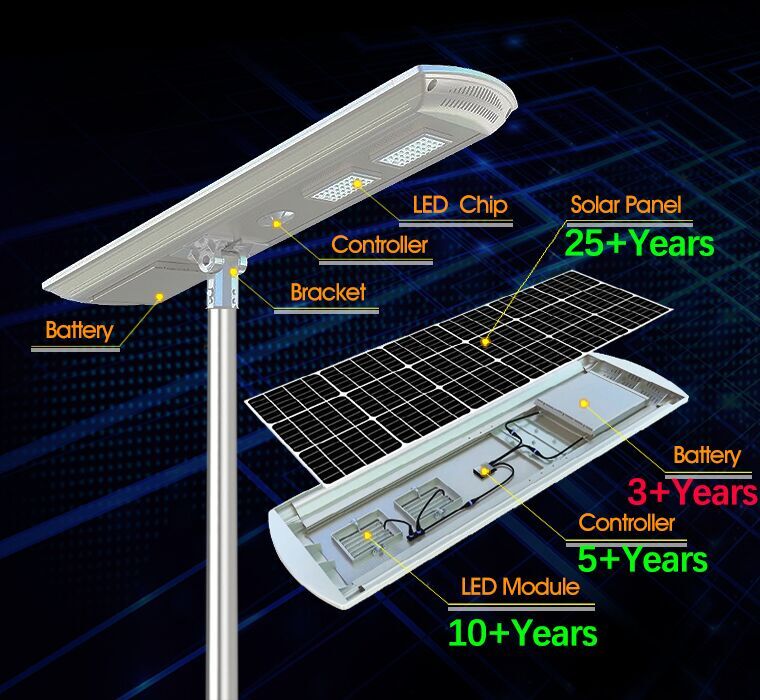
Figure 1. How the components of a solar street light work together.
The Lifespan of Each Component
A solar street light isn't an easy combination of different parts, but it's a system. Its overall lifespan is not only the weakest parts, but also there would be influence between different parts. So 1st thing is to check the single parts lifetime, then check the system conformity.
1. Solar Panel: 25+ Years
The solar panel is almost always the longest-lasting part of the system. Monocrystalline and polycrystalline panels are built to withstand decades of sun exposure, and most manufacturers offer 25-year performance warranties, guaranteeing the panel will still produce at least 80% of its original output after that period. In practice, solar panels degrade very slowly -- around 0.5-1% efficiency loss per year -- so they rarely need replacing during the working life of a street light. But there is one very important factor for the solar panel lifetime and efficiency, that is the dust cleaning of the panel, when there were thick dust on the panel, the charging efficiency will be heavily dropped.
2. LED Lamp: 50,000-100,000 Hours
LED light sources used in solar street lights are rated for 50,000 to 100,000 hours of operation, which translates to roughly 15-25+ years if the light runs for about 10-12 hours per night. LEDs don't suddenly burn out the way old sodium or halogen bulbs do; instead, their brightness gradually decreases over time (a process called lumen depreciation or Lumen maintenance). For LED, commonly lifetime is not a problem, but lumen maintenance is. Lumen maintenance is not only decided by Good-quality LED chips, but more decided by the heat radiation design. A big problem for solar street light is that most suppliers are just adding led quantities but don't do the heat radiation design, which makes the lumen drops quickly, and can not meet the international demand 50000 hours at 80% lumen maintenance and 100,000 hours at 60% lumen maintenance. Most companies telling 50,000 hours life time of LED, but actually the lumen maintenance might drop to 50% or even 40% only. Though the light not switch off, the brightness does not meet the demand actually.
3. Battery: 3-15 Years (the Biggest Variable from different suppliers)
The battery is the component most likely to limit the overall lifespan of a solar street light, and it's also where quality differences matter most:
- Lead-acid / gel batteries: 3-5 years, and performance drops noticeably in cold weather
- Lithium-ion (Li-ion) batteries: 5-8 years, better performance under low temperature but worse performance at high temperature.
- Lithium iron phosphate (LiFePO4) batteries: 8-15+ years, with far more charge/discharge cycles and better temperature tolerance, specially under high temperature.
Nowadays most companies using LiFe PO4 Lithium battery for its better performance, but still there are big difference between different qualities. The biggest problem for battery is that many companies using 2nd hand(recycle) battery, this type battery might also work for 3 to 5 years lifetime, but the capacity drops quickly, even the light still working, but the brightness will drops automatically or the working time at night will become shorter gradually. There is a tip to judge the battery quality is check the voltage of the battery. When the battery is 3.2V, this almost says the battery are 2nd hand. When the battery voltage is 12.8V or 25.6V, that means the battery quality good.
4. Controller and Housing: 5-10+ Years
The smart controller (which manages charging, discharging, and light sensors) and the aluminum housing/pole typically last as long as the rest of the system, provided they're built with weatherproof, corrosion-resistant materials (look for an IP65 rating or higher).
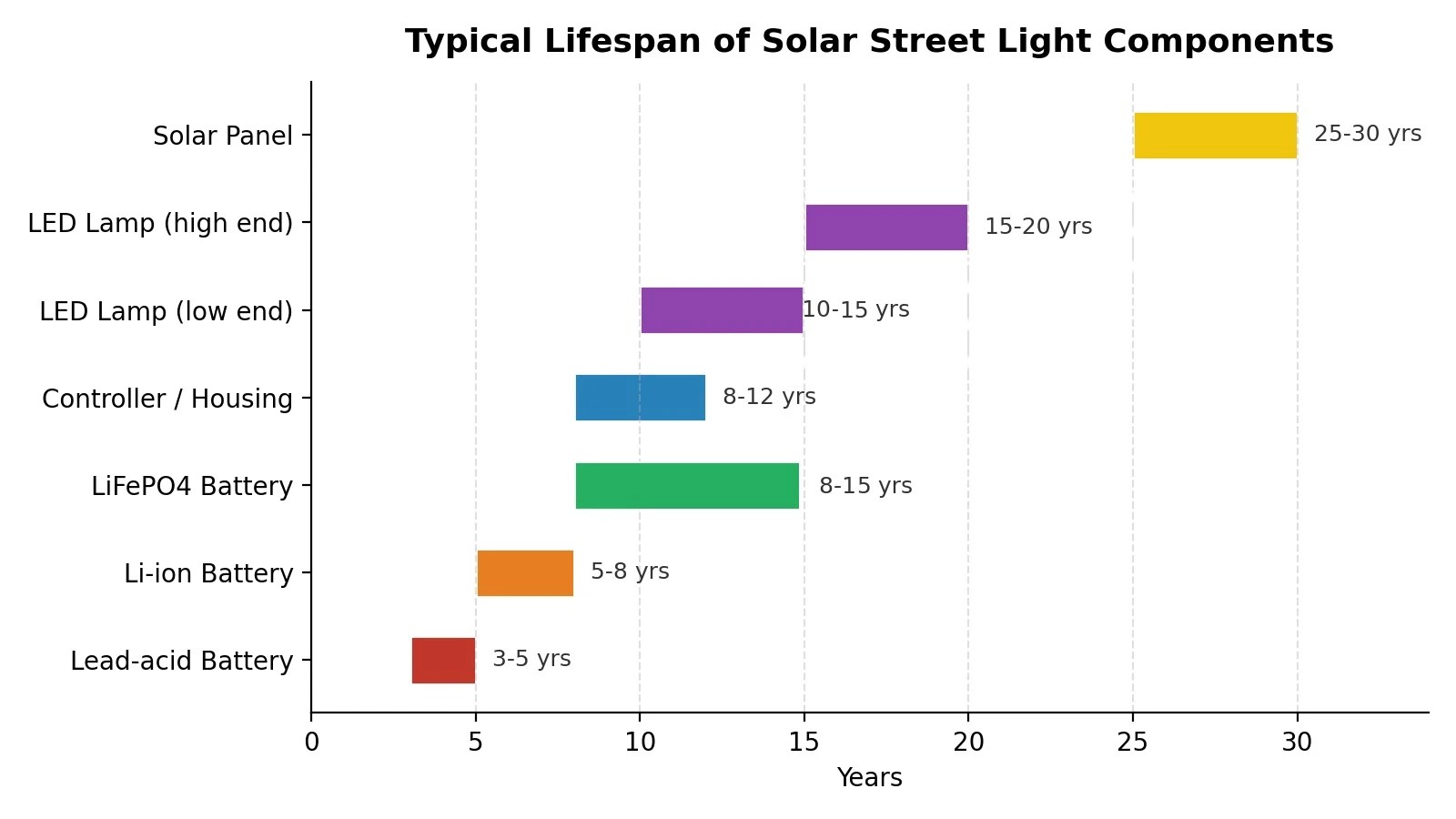
Figure 2. Typical lifespan ranges by component.
Average Lifespan at a Glance
|
Component |
Typical Lifespan |
|
Solar Panel |
25+ years |
|
LED Lamp |
10-25 years (50,000-100,000 hrs) |
|
LiFePO4 Battery |
8-15+ years |
|
Li-ion Battery |
5-8 years |
|
Lead-acid Battery |
3-5 years |
|
Controller / Housing |
8-10+ years |
|
Whole System (practical) |
3 to 15 years with maintenance |
Other Factors That Affect How Long Solar Street Lights Last
Several real-world conditions can shorten or extend the numbers above:
- Climate and temperature -- Extreme heat accelerates battery degradation, while very cold climates reduce battery capacity and solar panel efficiency in winter.
- Sunlight exposure -- Locations with fewer sunny days per year force the battery to work harder and drain further, shortening its lifespan.
- Component quality -- Budget systems with generic battery cells or unbranded LED chips often fail in 2-3 years, while reputable brands with certified components easily reach 8-10 years.
- Components consistency--There must be a reasonable consistency between Solar Panel(Input), Battery(Storage) and LED(Output). The input and storage must be bigger than the output. If output bigger than input or storage, the battery will drain every night, and the working lifetime will be severely affected.
- Maintenance frequency -- Dust and debris on the solar panel reduce charging efficiency; regular cleaning keeps the system operating at full capacity.
- Last but Not Least--- The local solar irradiance conditions. Different countries weather and solar irradiance conditions big different, so all the components capacity calculation should be based on the actual installation site weather, this is a thing most clients easy to ignore. So to have a professional technical solution from a professional supplier is very important.
How to Extend the Life of Your Solar Street Lights
- Clean the solar panel every 3-6 months to remove dust, pollen, and bird droppings that block sunlight.
- Choose LiFePO4 batteries over lead-acid or standard lithium-ion when purchasing -- the higher upfront cost pays off in fewer replacements.
- Install panels at the correct tilt angle for your latitude to maximize daily charging.
- Buy from manufacturers offering 5+ year warranties, which is a strong signal of build quality and battery grade.
Signs Your Solar Street Light Needs Attention
- The light turns on later or turns off earlier than it used to (battery losing capacity)
- Noticeably dimmer output compared to when it was installed (LED lumen depreciation or panel degradation)
- The light no longer stays on through the whole night, even in sunny weeks
Most of these issues point to the battery, which is the easiest and most common part to replace without swapping out the entire unit.
Frequently Asked Questions
Do solar street lights work in winter? Yes, though output is reduced. Shorter daylight hours and lower sun angles mean less charging time, so lights in northern climates should use larger batteries and panels sized for worst-case winter sun.
Can the battery be replaced without replacing the whole light? In most quality systems, yes. Batteries are typically housed in a separate compartment (either in the pole or under the panel) specifically so they can be swapped out independently.
Are solar street lights worth it long-term? Generally yes -- while the upfront cost is higher than wired lighting, there are no electricity bills or trenching costs, and a well-maintained system easily lasts 8-10+ years, often making it cheaper over its lifetime than traditional grid-connected street lighting.
Bottom line: Solar street lights typically last 8+ years as a complete system, with solar panels and LEDs often outlasting the battery, which is the component most likely to need replacement first. Choosing quality components -- especially a LiFePO4 battery -- and performing basic maintenance can push that lifespan well past 10 years.


